
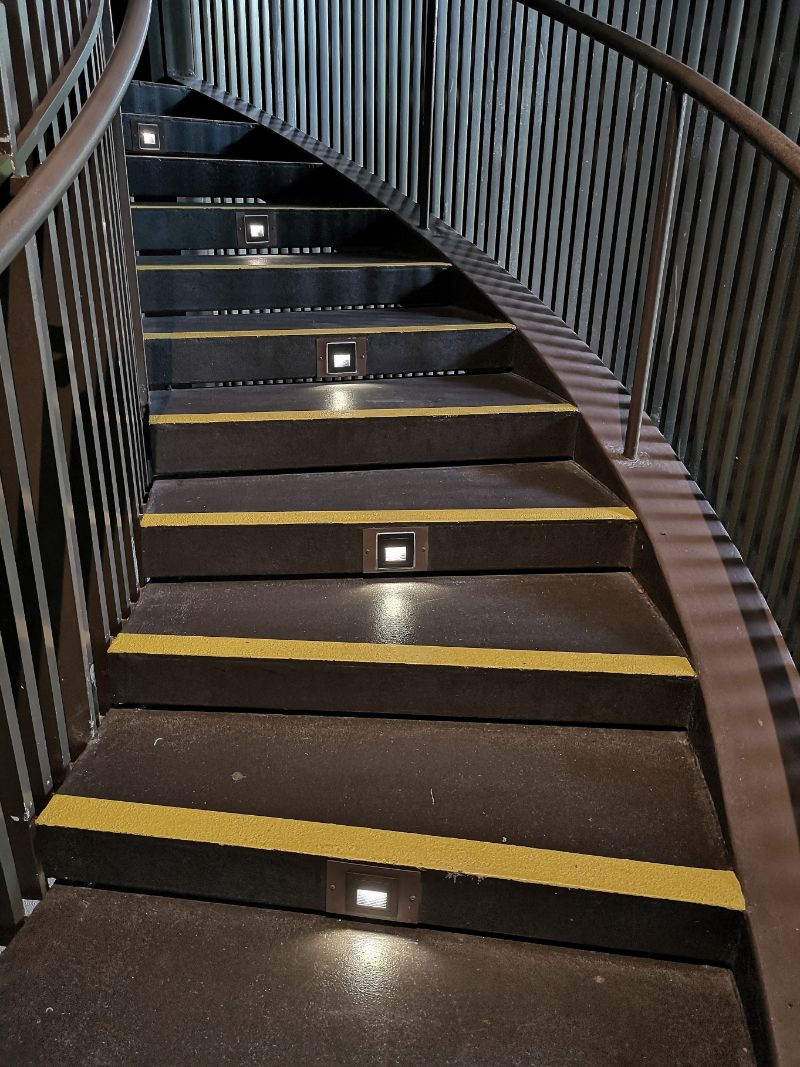
If you’re not already up to speed with your Anti-Slip Stair Nosing obligations under the Disability Access Code, then it’s never too late to ensure compliance.
Not only can non-compliance land you in a pretty sticky situation as a builder or architect, but you could be facing some serious legal challenges down the track if you’re caught out. And just ensuring your stairs have a grip on them won’t be enough, either. The Australian disability and access standards stipulate how anti-slip stair nosing should be implemented.
Who do these standards affect?
Obligations are rarely discussed in terms of who is culpable at the end of the day. That’s because these issues rarely find themselves in court. Often it’ll end in a formal complaint, and the issue is resolved before then. That’s not to say these issues can’t blow up. Prolific court cases have proven in the past that the following can be liable to pay out damages in the millions:
- Construction companies
- Building surveyors
- Building inspectors
- Building managers
- Developers
Avoid legal trouble
With compensation being expensive and not to mention the damage to reputation, being on the receiving end of this kind of litigation is enough to put anyone out of business. You’ll want to ensure you’ve got the right design and the materials too. But more on that later.
So, where do these standards apply?
Any new building work must comply with the standards in Part 1 of the Australian Standard Design for Access and Mobility. Exceptions are for private residences. Note that these codes are for internal stairways and external stairways alike. Since 2009, eligible new building work would have been subject to the design regulations that set out minimum design requirements to ensure equal access for people with disabilities.
What exactly are my obligations?
As a designer, builder, or architect, it’s clause 11 of AS1428.1 that you’ve got to worry about most when it comes to anti-slip stair nosing. These codes have been adopted by the Building Code of Australia (BCA) – which is legally binding. Clause 11 of AS1428.1 states that:
- Anti-slip stair nosing must not project beyond the face of the riser.
- The riser may be vertical or a backward splay of up to 25mm.
- Anti-slip stair nosing must be continuous across the entire width of the stair tread
- Stair nosing must have a sharp intersection and be rounded to a 5mm radius.
- Each nosing must have a coloured tread between 50 and 75mm deep across the entire step.
- The tread must have a minimum luminance contrast of 30% compared to the backdown colour.
- If the luminance contrast strip is located at the front of the stair nosing, the luminance area must not extend down the rider more than 10mm.
- Stair risers must be opaque
What is luminance contrast, and why is it important?
Luminance is the contrast of colour from one surface compared to another surface next to it. It’s not just the colours, it’s also how much each surface reflects off another. Low levels of luminance can be a problem for people with visibility issues. Two surfaces with the same colour and little to distinguish between them can be dangerous if there’s a risk of falling or injury.
Why are these standards so strict?
Fulfilling your obligations under these strict codes is essential for one main reason. To ensure equal access to all people, regardless of disability. Anti-slip stair nosing is an important feature in any building; for those with vision impairment, navigating stairs can be dangerous. By sticking to the codes, you’re ensuring safe and equal access to the premises. Essentially you owe it to your clients and anyone who walks through the doors to ensure 100% compliance.
It’s not just the design – it’s the materials too
Being 100% compliant doesn’t mean you can import sub-par products and get away with using those. The BCA stipulates that certain materials must be used to ensure the integrity of the materials used; otherwise, your design simply won’t meet the standards. With that in mind, sourcing products from within Australia that are designed specifically to meet the standards set out in these codes will save you money in the long term and ensure your stairs are 100% compliant.
Do you know your Disability Access Code building obligations? Get 100% compliant and know your codes. Here’s how.
Ensure 100% compliance
At Image Bollards, we design our products to meet strict BCA standards. Our anti-slip stair nosing is designed to meet all obligations and is suitable for commercial and industrial applications. With a CSIRO ‘R13’ anti-slip resistance rating, it doesn’t get better than that. Ensure your stairs are up to scratch with the right materials: get in touch with Image Extra today for a quote.