
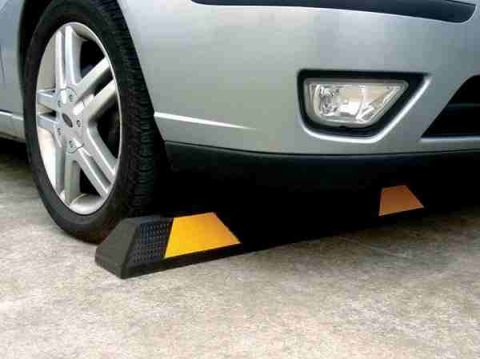
Many property owners and managers are switching to using rubber wheel stops at their locations. These wheel stops are a great option because they are made from environmentally friendly recycled rubber, tough and resistant to damage, and they have high visibility added at the manufacturing stage so the colours won’t fade. However, many models of wheel stops are available to choose from, and if this is your first exposure to using rubber stops, it can become confusing. In this article, we will look at five key things you need to consider before making a final choice.

1. Understand Rubber Wheel Stops
We’ve touched on some of the advantages already, but metal, plastic, and concrete wheel stops are also available, so why choose rubber? A rubber wheel stop is highly resistant to the effects of the sun, and it will not crack under environmental conditions, unlike concrete. It’s resistant to heat and oil and will be supplied with reflective markings to promote visibility at night or in low-light conditions. These stops are comparatively cheap, easy to install without any special tools, and a single worker can move them and fix them into place. A rubber wheel stop is an excellent choice for locations such as parking areas, warehouses, and factories.
2. Identify the Wheel Stop Locations
The spaces where you need to install your wheel stops should be carefully identified well ahead of time. We listed the best locations for a rubber stop above, but a lighter polymer option may be a better fit if you need a wheel stop for a residential or commercial area.
3. Understand Traffic Types and Volume
The types of vehicles and the traffic volume at your location can be a major factor in the type of wheel stop you install there. If you have heavier trucks in a loading bay area, it may be better to fit a substantial steel wheel stop instead. A wheel stop can be designed for different thicknesses, which could affect your site’s traffic flow. Using dedicated parking bays, a rubber wheel stop is well-suited for cars and light vans.
4. Consider the Options
One of the best things about a rubber wheel stop is that it can be easily customised to suit your particular needs. For example, if you have disabled parking bays for your employees, you may want to designate them with a tailored wheel stop colour. The reflective colours can be implemented to suit your existing warning scheme, or you could choose something different for a particular area.
5. Get Professional Advice
Once you’ve looked at all the considerations listed above, it’s time to contact a professional to help you with the details. It’s a great idea to involve Image Bollards early so we can benefit you from our extensive experience. You could purchase the rubber wheel stops and install them yourself, or we can help you with that.
If you’re interested in using rubber wheel stops at your location, contact Image Extra for expert help and advice.