

A boom gate looks like the simplest piece of safety gear on any site: one arm, one hinge, up or down. The clever part is everything you can’t see. So how do boom gates work, and does your car park, loading area or entry need one?
Whether you’re managing a residential complex, a shopping centre or a mine site, the principle is the same. A boom gate controls who gets in and out without anyone standing guard.
Key Takeaways
- How do boom gates work? A vehicle is recognised, a control board validates the signal, the motor raises the arm, sensors watch the gap and the arm lowers.
- A boom gate is a barrier arm on a housing that holds the motor and control board.
- Safety features such as obstacle detection, reverse on contact and photocells stop the arm closing on a vehicle or person.
- Manual boom gates suit low-use entries, and automatic ones suit busy entries.
- A boom gate controls access but isn’t a crash barrier. Use bollards where you need protection from impact.
What a Boom Gate Actually Is
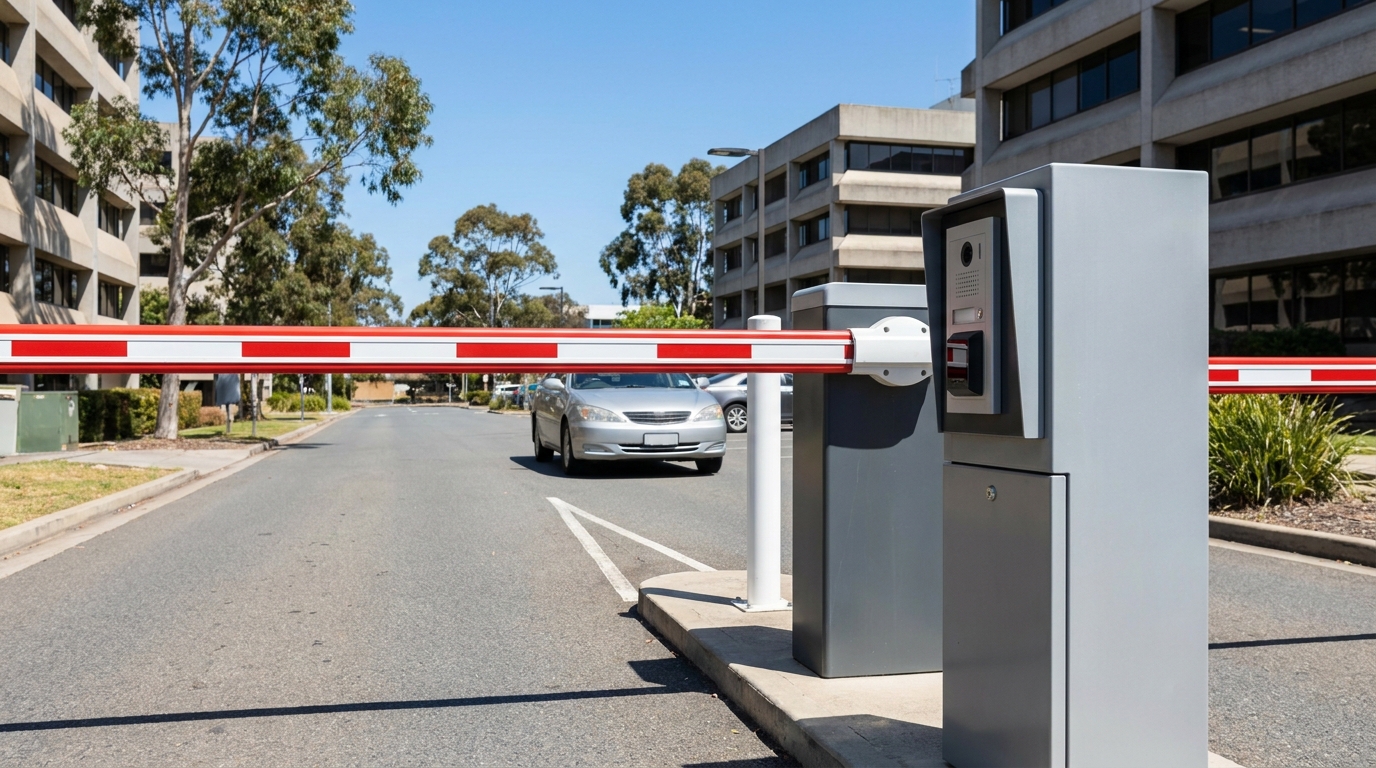
At its core, a boom gate is a barrier arm mounted on a housing that holds the motor and control board. The arm swings up to let a vehicle through and drops back down behind it. You’ll find them at residential complexes, shopping centres, toll booths and paid car parks, where they regulate the flow of traffic.
Most come in one of two forms: manual or automatic. We’ll compare those shortly, but first, the sequence that plays out every time a vehicle arrives.
How a Boom Gate Works, Step by Step
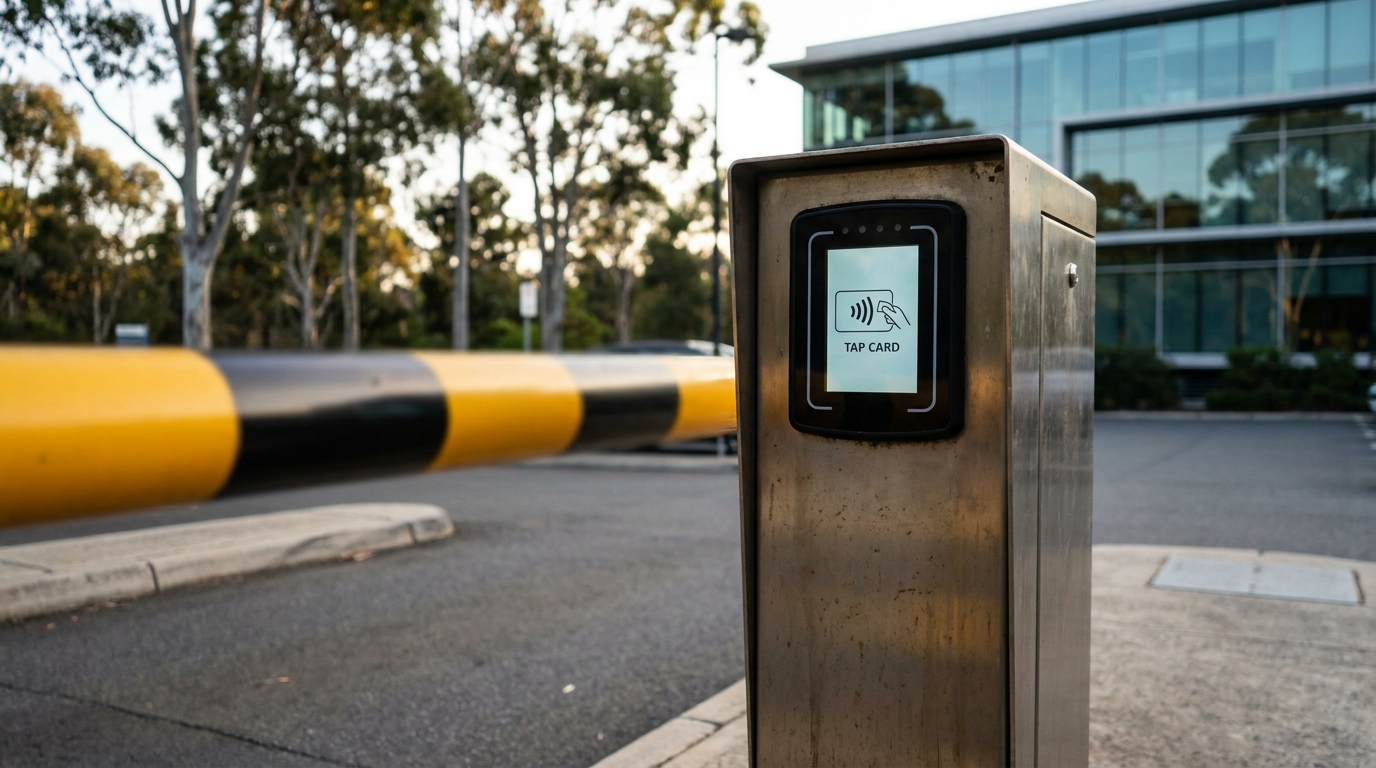
- The vehicle is recognised. Depending on the setup, that might mean taking a ticket, swiping a card, entering a PIN at a reader post, or pressing a remote transmitter. Optical sensors or motion detectors can also trigger the arm.
- The control board decides. It checks the signal and, if it’s valid, powers the motor.
- The arm rises. In a paid car park, taking a ticket raises the boom on entry, and inserting the paid ticket raises it again on exit.
- Sensors watch the gap. While the vehicle passes through, photocells and other detectors keep an eye out for anything in the way.
- The arm lowers. On many systems, it closes after a pre-set time, ready for the next vehicle.
Boom Gate Safety Features Worth Asking About
A boom gate that can’t sense its surroundings would be a liability, which is why the safety side gets so much engineering attention. These are the features worth asking about.
Obstacle Detection
An amperometric device measures how hard the motor is working. If the arm meets resistance, say from a vehicle or a person, the reading changes and the system reacts. The sensitivity is adjustable.
Reverse on Contact
Many systems send the arm straight back up the moment it touches an obstacle, rather than pushing on.
Photocells
These stop the barrier from moving if they detect something in the passage, even with the motor off.
Soft Stops
The arm slows as it opens and closes, which gives smooth stops and puts less strain on the mechanism.
“Man Present” Control
The gate only moves while a button is held down. It works like an emergency control for avoiding an unexpected hazard.
Adjustable Speed
Settings can be tuned to suit narrow or wide passages, so the gate is fast enough for busy entries and safe enough for pedestrians nearby.
Electric gate drives are covered by their own Australian safety standard (AS/NZS 60335.2.103), which deals with electric drives for gates and doors, including the hazards created by the movement itself. Regulators such as SafeWork NSW also publish guidance on industrial gate safety, which is worth reading if pedestrians use the entry.
Manual vs Automatic Boom Gates
Manual Boom Gates
Manual boom gates run on a spring balance mechanism. They cost less, and they suit locations without electric power or sites where the gate barely gets used.
Automatic Boom Gates
Automatic boom gates rely on sensors and a powered drive, and they’re the usual pick for busy entries. Many systems can link two barriers together, and most include low-voltage operation with a built-in safety board.
If vehicles come and go all day, automatic usually earns its place. If the gate opens a handful of times a week, manual may be enough.
What a Boom Gate Does for Your Site
- Less guarding. A gate doesn’t need rostering, which can reduce ongoing labour costs compared with staffing an entry around the clock.Less space. Without a guard booth, all you need is room for the arm to swing vertically.
- Capacity control. In car parks with limited bays, such as shopping centres, a boom gate can stop further vehicles entering once the site is full.
- Restricted areas. It keeps unauthorised traffic out of places that need it.
- Flexibility. Boom gates turn up at hospital car parks, apartment complexes, event venues, arenas, railways and mine sites.
Boom Gates vs Bollards: Where Each Fits
Boom gates aren’t the only way to control an entry. Automatic bollards, the pole-like barriers common in the Perth CBD, do a similar job where you want access control that doesn’t look like a gate.
Whichever you choose, think about the whole entry. As our guide on choosing access gates points out, a gate is no use if vehicles can simply drive around it. Pairing it with safety barriers or bollards closes that gap, and bollards are the better tool wherever you need protection from impact. We’ve supplied bollards and safety barriers to Perth sites since 1994, so we can help you protect and control your entry.
Talk through your entry with our team. We can show you how bollards and other barriers work alongside a boom gate, or on their own. Contact Image Extra or call 1300 366 999.
Boom Gate FAQs
Do boom gates need power?
Automatic ones do. Manual ones don’t, because they run on a spring balance mechanism.
Will a boom gate stop a vehicle that’s determined to get through?
No. It controls access, but it isn’t built as a crash barrier. Bollards are the better tool for that job.
How long does a boom gate arm need to be?
It needs to span the full width of the passage, so measure the opening first and check the longest span your supplier offers.
How much does a boom gate cost?
It depends on whether you choose manual or automatic, the arm length and the access controls you add, such as card readers or ticketing. Manual gates cost less than automatic ones. Tell us about your entry and we’ll point you to the right option.
Are boom gates safe for pedestrians?
They’re designed with sensing and stopping features, including obstacle detection, reverse on contact and photocells. Even so, pedestrians shouldn’t walk through the gate lane, so give them a separate walkway where you can.
Boom gate or bollard: which do I need?
A boom gate suits an entry that vehicles pass through many times a day. Bollards suit places where you need protection from impact, or access control that doesn’t look like a gate. Many sites use both.